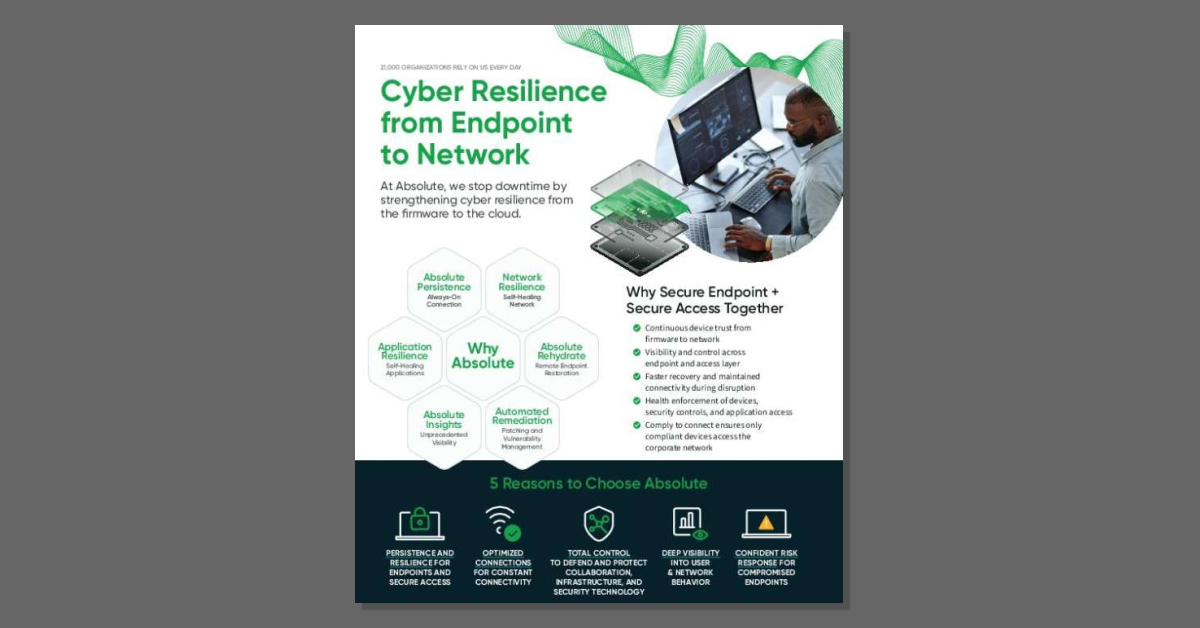
Cyber Resilience from Endpoint to Network
Make device trust a condition of network access. The Absolute Secure Endpoint and Secure Access datasheet shows how the two solutions work together to reduce downtime and unauthorized access. Secure Endpoint establishes trust with firmware-embedded persistence, while Secure Access enforces it with zero trust policies, comply-to-connect controls, and self-healing connectivity. Download the datasheet to learn how to keep your workforce connected and secure.
What problems does Absolute help IT and security teams solve?
Absolute is built to help IT and security teams deal with the day-to-day realities of managing a distributed, always-on workforce. Common challenges it addresses include:
- Endpoints going dark – Devices that drop off the radar, making it hard to track, secure, or support them.
- Hardware and software inventory – Difficulty maintaining accurate device, OS, and application inventories for thousands of endpoints.
- Device lifecycle and ROI – Limited visibility into software utilization and device usage, which makes it harder to manage lifecycle and justify spend.
- Security exposure – Stolen or lost devices, unpatched systems, and inconsistent enforcement of security standards across the fleet.
- Sensitive data risk – Limited ability to identify where sensitive files live across endpoints.
- Downtime and disruption – Service interruptions, application connectivity issues, and low visibility into network performance and user experience.
- Helpdesk overload – High support call volume due to connectivity problems and performance issues.
With 21,000 organizations relying on Absolute, the platform is focused on strengthening cyber resilience from the firmware to the cloud, so IT and security teams can keep users productive while reducing risk and operational noise.
How do Absolute Secure Endpoint and Secure Access work together?
Absolute brings together two complementary capabilities: Secure Endpoint and Secure Access.
Absolute Secure Endpoint helps you:
- Establish continuous device trust from firmware to network, so endpoints remain visible and manageable.
- Enforce endpoint compliance and security posture, including health checks on devices and security controls.
- Use self-healing applications to automatically repair or restore critical security tools if they are removed or broken.
- Gain a source of truth for endpoint visibility and telemetry, including device, application, and web usage tracking.
- Support remote endpoint restoration and recovery after incidents or widespread disruption.
Absolute Secure Access focuses on the network and user experience:
- Provides optimized, secure access to both cloud and on-premises applications.
- Implements Zero Trust policies to enforce authorized access and protect resources.
- Delivers deep visibility into network and user behavior to speed troubleshooting.
- Helps reduce downtime and application connectivity issues, even in challenging network conditions.
Together, Secure Endpoint establishes trust and Secure Access enforces it. This combination reshapes how organizations think about cyber resilience by:
- Maintaining unbreakable connectivity through firmware-embedded persistence.
- Ensuring comply-to-connect so only compliant devices access the corporate network.
- Supporting a work-from-anywhere workforce with consistent security and performance.
What business outcomes can we expect from using Absolute?
Organizations use Absolute to reimagine how they manage risk, connectivity, and support. Common outcomes include:
- Higher endpoint resilience – Continuous device trust, self-healing applications, and automated remediation reduce the impact of incidents and unpatched vulnerabilities.
- Improved compliance and access control – Comply-to-connect policies ensure only compliant devices reach corporate resources, supporting Zero Trust strategies.
- Less downtime and fewer disruptions – Optimized network performance and always-on connections help keep users productive, even on unreliable networks.
- Stronger visibility and control – Deep insight into endpoint telemetry, device and software inventory, and user network behavior supports better decision-making.
- More efficient IT operations – Streamlined patching, automated remediation, and better diagnostics help reduce helpdesk call volume and speed troubleshooting.
- Better protection for at-risk devices and data – Remote device recovery, risk response for compromised endpoints, and tracking of sensitive files help limit the impact of theft, loss, or compromise.
In practice, this means IT, security, and network teams can collaborate more effectively, protect users and resources, and support a distributed workforce without sacrificing visibility or control.




 Sign in with LinkedIn